We use cookies to provide you with the best possible experience. They also allow us to analyze user behaviour in order to constantly improve the website for you. For more details, visit: https://business.safety.google/privacy/
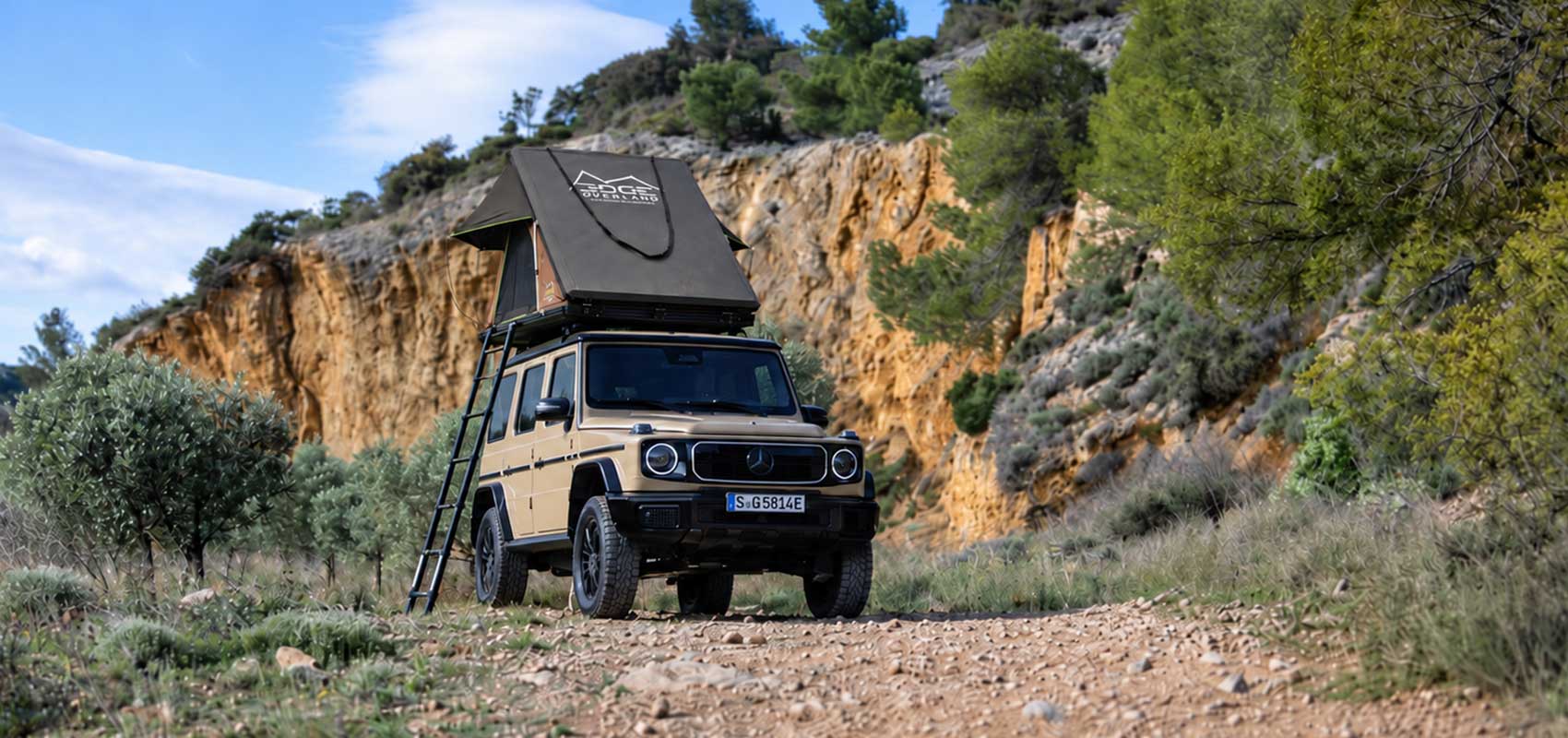
Few vehicles have earned the G-Class's reputation across four decades of continuous production. Militaries, aid organisations, expeditions, and overlanders across Europe have all relied on it for the same reasons: a ladder frame that genuinely works, three locking differentials, and a body that has barely changed its fundamentals since 1979. It is also one of the few vehicles where fitting a rooftop tent is a natural extension of what the vehicle already is - not an afterthought bolted to a road car. This guide covers the G-Class generations that matter for overlanding in Europe, how each body variant handles rooftop tent fitment, the dynamic roof load rating, and which EDGE Overland hardshell rooftop tents are genuinely compatible with each variant.
Roof fitment on the G-Class is body-variant dependent. The short-wheelbase (SWB) 3-door and long-wheelbase (LWB) 5-door models have meaningfully different usable roof lengths, which directly affects which tent footprints are practical. This article works through those differences clearly before making any tent recommendation.
 In Stock
2561.98 EUR
In Stock
2834.71 EUR
In Stock
2636.36 EUR
All EDGE Overland rooftop tents are hard-shell aluminium models with Raptor-style coating, 4000 mm water resistance, and fast one-person setup. Not all models are compatible with every G-Class body variant - the table below includes a compatibility column based on roof length and dynamic load rating.
The G-Class is not a vehicle that needs to be made capable. It arrived capable, and has stayed that way across four decades and multiple generations. What a rooftop tent adds is a self-contained sleep system that fits the platform's expedition logic: faster camp setup, better shelter than a ground tent on uneven or wet terrain, and a clean departure in the morning without packing a ground sheet. The G-Class roof is well suited to carrying one - provided you match the tent to the body variant, respect the verified dynamic roof load rating, and include the weight and rating of the actual crossbar or mounting system in your calculations.
Earlier G-Class generations were built in several body lengths and configurations, including short-wheelbase (SWB) and long-wheelbase (LWB) versions. That still matters for rooftop-tent fitment, and compatibility should be judged from the actual roof geometry, usable crossbar positions, bar spacing and verified roof-load rating. The post-2018 European G-Class is a five-door model with a 2,890 mm wheelbase, so it should not be classified as an SWB-only vehicle.
Tent length should be proportionate to the roof and body. On SWB 3-door variants, the compact Horizon Mini is the recommended choice; the 210–220 cm Explore One and Horizon One extend too far beyond the short roof. On LWB and post-2018 five-door configurations, all three EDGE tents are well proportioned. EDGE rooftop tents are supported at their mounting rails by correctly positioned crossbars; the entire closed shell does not need to sit on a full-length platform rack.
The W460 is the original civilian G-Class - utilitarian, military-derived, and by G-Class standards, lightweight. It is genuinely simple to maintain in the field, which is exactly why it remains relevant to European expedition builders four decades later.
Gutter-mount crossbar systems fit cleanly on both SWB and LWB variants. No single confirmed official dynamic roof-load figure could be established across the W460 range, so the exact vehicle should be checked before finalising the setup. For buyers, the Horizon Mini is the natural starting point because its 65 kg weight and compact footprint place the least demand on an older G-Class roof, and it is the recommended choice on SWB models. Explore One and Horizon One remain options worth considering on LWB W460 models where the verified roof-load limit and correctly rated crossbars support them.
The W461 ran for thirty years as the utility-focused counterpart to the W463. It was sold primarily to fleet buyers, aid organisations and military users, which gives it a reputation for durability that civilian-trim G-Classes rarely match. Specifications varied significantly across that production span and by body configuration. Mercedes body-builder documentation lists different maximum roof loads for different W461 configurations, including 100 kg, 120 kg and 200 kg, which means the generation offers anything from relatively conservative to very generous rooftop-tent capacity depending on the exact vehicle.
Roof mounting on W461 variants is commonly handled with gutter-mount crossbars. The Horizon Mini is the lightest and easiest EDGE option to accommodate, while Explore One and Horizon One become increasingly attractive on LWB W461 configurations with higher documented roof-load ratings and suitable crossbar spacing. The key is to match the tent to the exact body variant and its verified rating.
The W463 is the generation that most people picture when they think of a G-Class. It was produced for nearly three decades, gained strong luxury trim over time while retaining the core off-road architecture, and built an exceptionally deep aftermarket ecosystem in Europe. For rooftop tent builds, the W463 is the most straightforward G-Class generation to work with: widely understood, broadly supported, and the subject of more expedition build documentation than any other variant.
European documentation for late W463 models shows that roof-load ratings can vary by model. Figures of 150 kg are documented for models such as the G 350 d and G 500, while some AMG variants were rated at 200 kg. On suitable W463 configurations, that gives owners genuine flexibility across the EDGE range: Horizon Mini for the lightest and most compact setup and the recommended choice on SWB models, Explore One for its low 18 cm packed profile, or Horizon One when maximum sleeping space is the priority; both suit LWB models. The exact vehicle rating and crossbar system should still be confirmed before installation.
Gutter-mount crossbar systems are used across the W463 production span; properly rated crossbars are the standard mounting solution (see Crossbars and Roof Racks below).
The post-2018 civilian G-Class is a major redesign of the earlier W463. The familiar body shape remains, but the platform underneath changed substantially, with independent front suspension, a modern 9-speed automatic, a greatly updated interior and a higher kerb weight. In European specification it is a five-door model with a 2,890 mm wheelbase. The current W465 continues the same modern G-Class format and retains a 150 kg permissible roof load in Mercedes-Benz European specifications.
Roof mounting on the post-2018 G-Class uses dedicated factory mounting points. Mercedes-Benz offers a genuine three-crossbar system for W463 models from 06/2018 and W465 models from 07/2024. The complete three-bar system weighs 9.6 kg.
With this system, Mercedes-Benz specifies a maximum roof load of 150 kg, and all three EDGE tents fit within it (see Dynamic Roof Load below). As a five-door model, the post-2018 G-Class is also well proportioned for all three tents, allowing the choice to focus on what the owner actually wants from the tent: the Horizon Mini for minimum weight and compactness, Explore One for the lowest packed profile, or Horizon One for the largest sleeping area. Correct installation, crossbar positioning and the relevant mounting instructions still apply.
For the modern post-2018 G-Class, Mercedes-Benz documentation specifies a maximum permissible roof load of 150 kg when at least three pairs of supporting feet are used and the load is distributed correctly. Current European W465 specifications also state a 150 kg permissible roof load. For late W463 models, European documentation shows 150 kg on models such as the G 350 d and G 500, with higher figures on some AMG variants. Older W460 and W461 vehicles require more model-specific checking rather than one universal assumption.
The dynamic figure applies while the vehicle is moving and is the relevant limit for the tent, crossbars, and any other equipment that remains on the roof during travel. Stationary allowances for rooftop-tent use should not be confused with the driving limit. Where the generation or exact body configuration has no single verified figure, check the vehicle documentation before finalising the setup.
For the normal rooftop-tent installation, calculate the tent together with the actual crossbar system. On the post-2018 G-Class, the genuine Mercedes three-crossbar system weighs 9.6 kg: Horizon Mini plus bars totals 74.6 kg, Explore One totals 79.6 kg and Horizon One totals 99.6 kg. This means all three EDGE models remain comfortably below the documented 150 kg roof-load limit by weight.
All three older G-Class generations commonly use gutter-mounted crossbars that clamp to the rain gutters around the roofline. This is a robust and well-understood mounting approach: no drilling, reversible installation and a wide range of vehicle-specific systems. For an EDGE rooftop tent on its own, properly rated crossbars are the natural starting point because they preserve more of the vehicle's available roof-load capacity. A roof rack is the second option: consider it when no suitable crossbars are available, when the available crossbars are not rated for the tent's weight, or when you also want to carry other gear such as recovery boards, fuel or storage on the roof.
The post-2018 G-Class uses dedicated factory roof mounting points. Mercedes-Benz's genuine system consists of three aluminium crossbars and weighs 9.6 kg in total. With three pairs of supporting feet, Mercedes specifies a 150 kg maximum roof load, which gives all three EDGE tents substantial weight headroom. A roof rack still makes sense when additional roof cargo is part of the build.
Use a vehicle-specific, correctly rated crossbar or rack system that interfaces properly with the G-Class mounting points and follow both the vehicle and mounting-system installation instructions. EDGE's tent mounting method is designed around transverse bars with suitable spacing and brackets; a generic or incorrectly fitted bar system should not be used simply because its nominal load rating appears sufficient.
Verdict: Hard-shell rooftop tents are the preferred option on the G-Class. The boxy body profile already generates significant aerodynamic drag - a low closed hardshell adds far less than a bulky folded softshell. The aluminium shell also handles the dust, debris, and brush contact that comes with serious off-road use far better than exposed fabric. On SWB variants, the Horizon Mini is the recommended EDGE Overland tent. On LWB and post-2018 five-door models, all three EDGE tents are suitable.
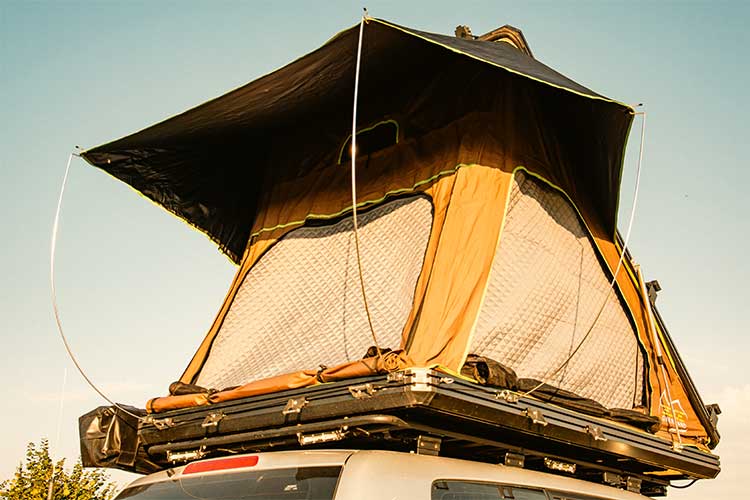
The perfect accessory for those cold nights out or winter camping in your Explore One Rooftop Tent, creating an extra layer of thermal insulation for maximum comfort.
In Stock
239.67 EUR
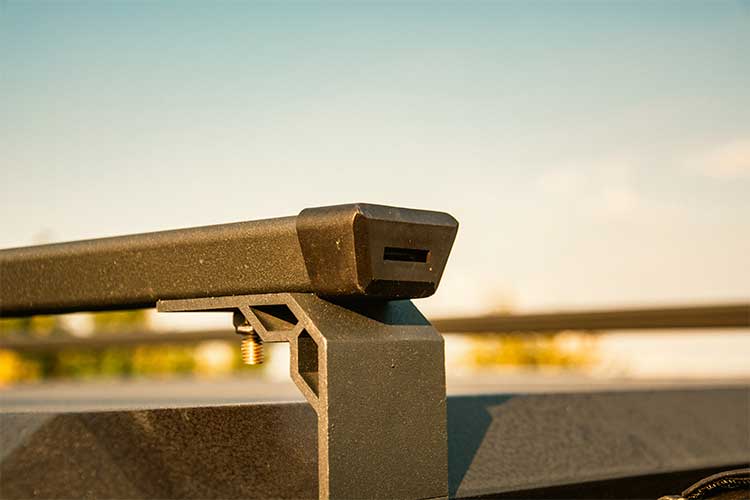
This roof bars allow you to carry additional items on top of your Explore One Rooftop Tent, may them be traction pads, solar panels, a kayak, bikes, or anything else you need on your trip.
In Stock
140.5 EUR
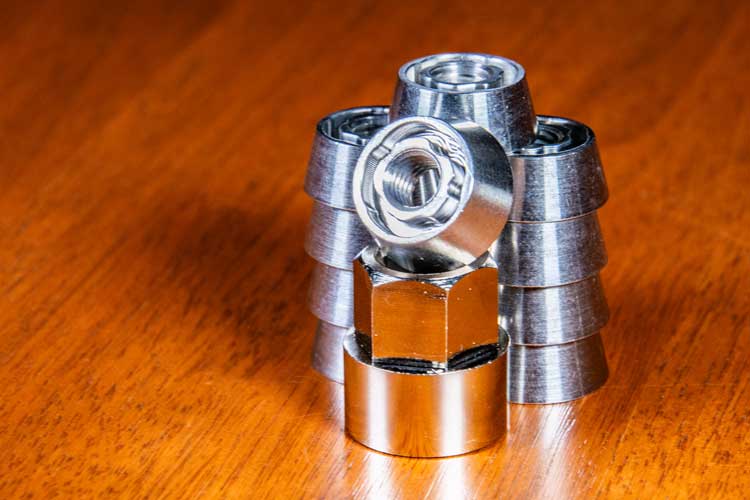
An essential accessory for outdoor adventurers and car enthusiasts. Specially designed for securing rooftop tents, car awnings, and various car accessories.
In Stock
41.32 EUR
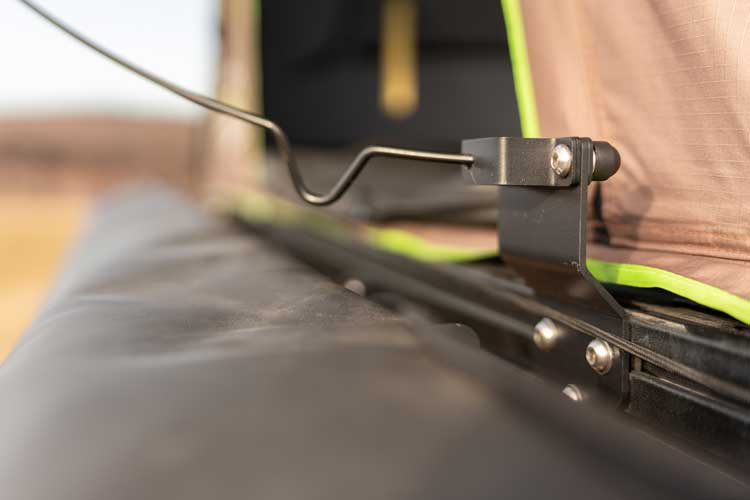
The Explore Pole Riser is a simple add-on made for our Explore rooftop tents. Its role is clear. It raises the mounting point of the rainfly poles. This small change solves a common setup problem many users face when running side-mounted gear.
In Stock
41.32 EUR
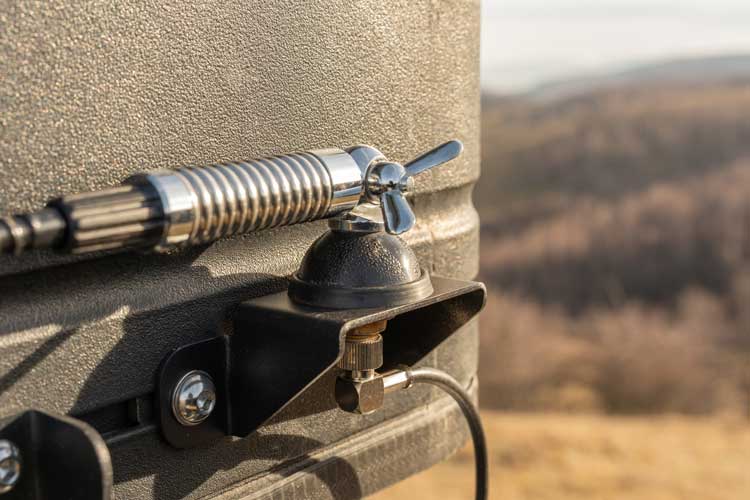
The antenna mounting bracket for rooftop tents gives you a simple way to mount an antenna directly on your EDGE Overland tent, without adding extra hardware to your vehicle.
In Stock
24.79 EUR
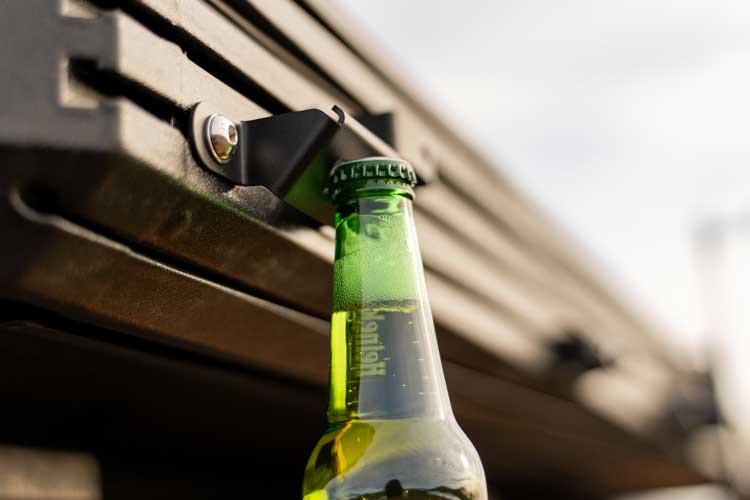
Never search for a bottle opener again! This opener stays conveniently mounted on your rooftop tent at all times. It is always ready. No searching. No unpacking. No frustration. Just crack open a cold one whenever you desire it!
In Stock
20.66 EUR
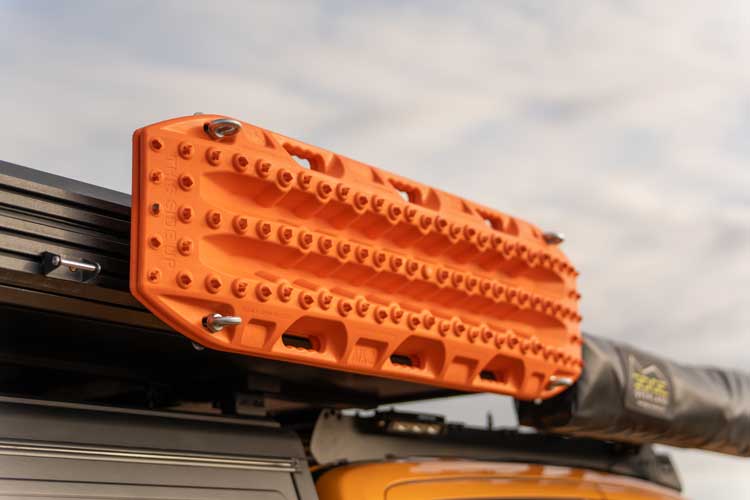
The traction board holder for rooftop tents is a simple, strong way to carry traction boards on your car tent. Using these brackets, you free up valuable space inside your vehicle or on your roof rack.
In Stock
99.17 EUR
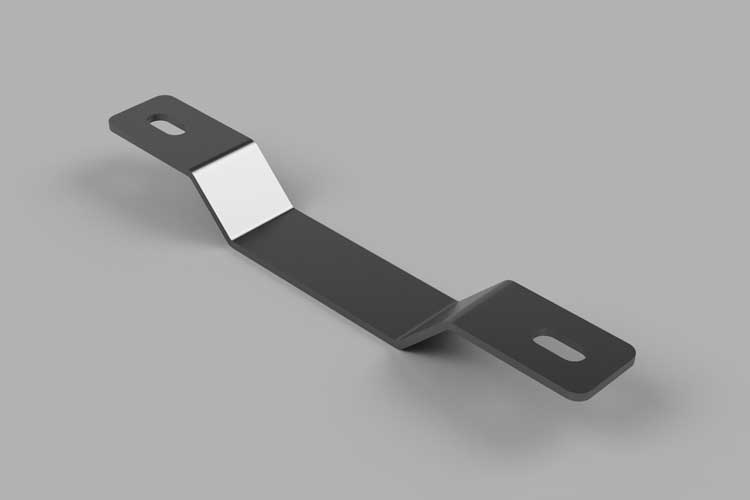
Most rooftop tents fit standard bars without effort. But some vehicles use wider roof bars or roof rack cross bars, and in those cases, a standard mounting kit cannot clamp the tent safely. These brackets solve the problem!
In Stock
33.06 EUR
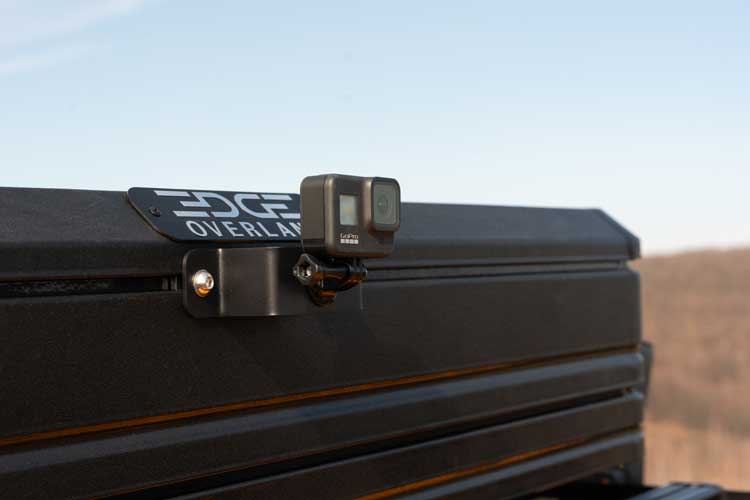
Want better footage from your trips without trying to hold a camera in the wrong place? This camera mounting bracket gives you a simple, secure way to attach your camera directly to your EDGE Overland rooftop tent.
In Stock
57.85 EUR
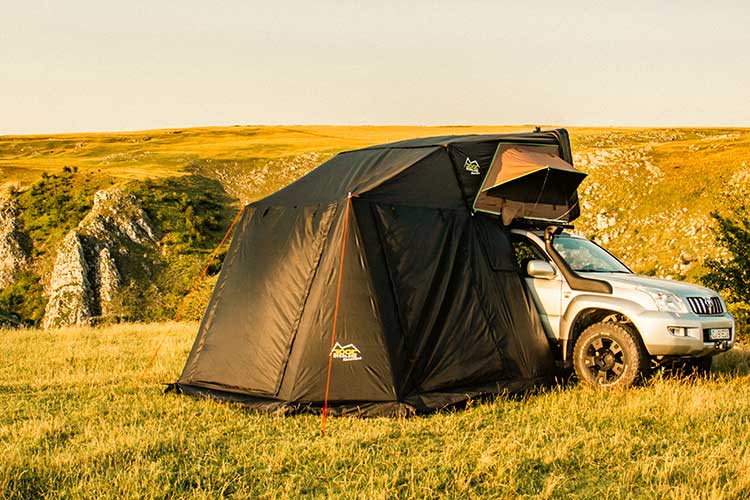
This versatile annex is the perfect addition to your Horizon One rooftop tent, expanding the living area and offering privacy and protection from sun and bad weather.
In Stock
603.31 EUR
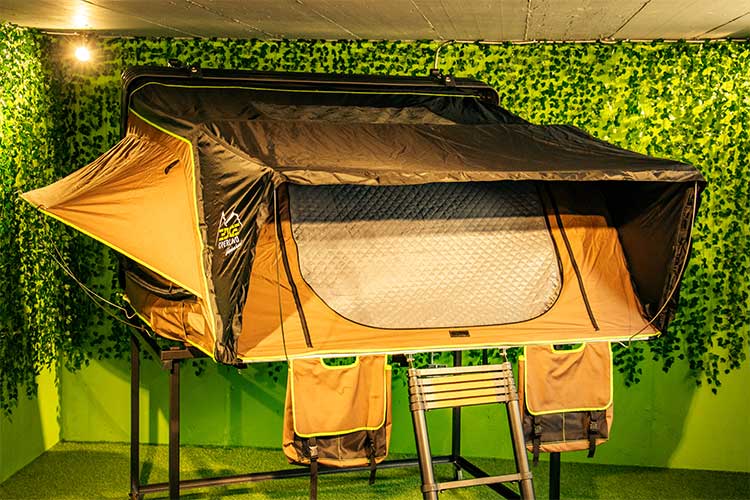
The ideal accessory for those cold nights out or whilst camping during winter in your Horizon One Rooftop Tent, creating an extra layer of thermal insulation for added comfort.
In Stock
268.6 EUR
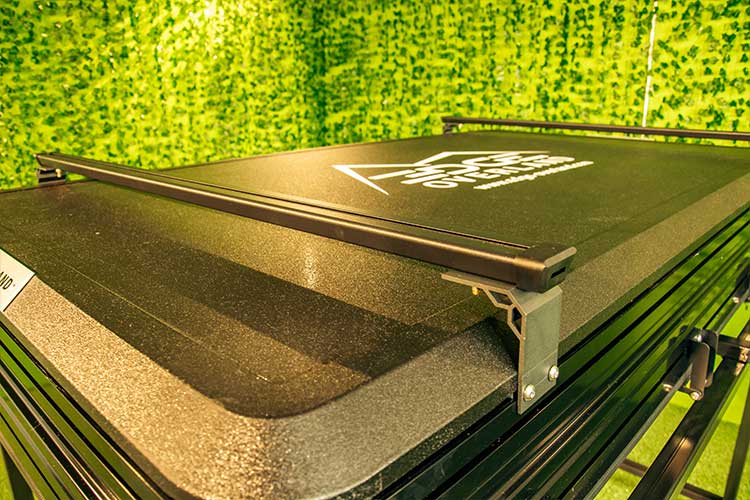
These roof bars allow you to bring along additional items on top of your Horizon One Rooftop Tent, from solar panels, to traction pads, bicycles, or basically anything else you need.
In Stock
132.23 EUR
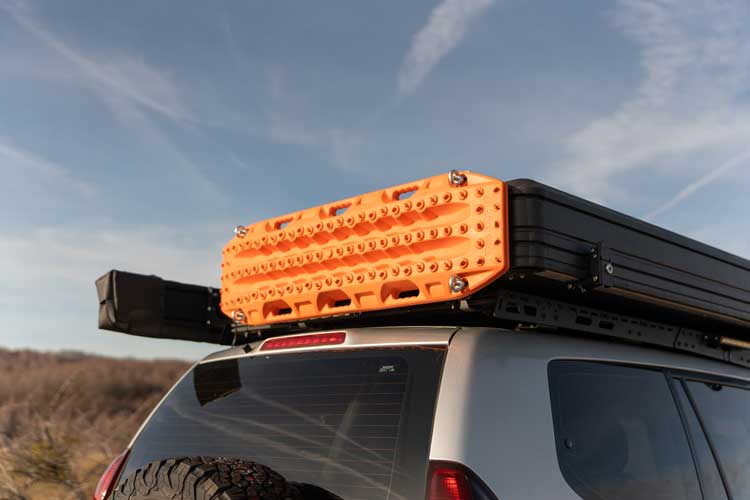
This holder mounts your traction boards directly to your Horizon Rooftop Tent. It frees space inside your vehicle and clears room on your roof rack - rather use that extra space for many other gear.
In Stock
99.17 EUR
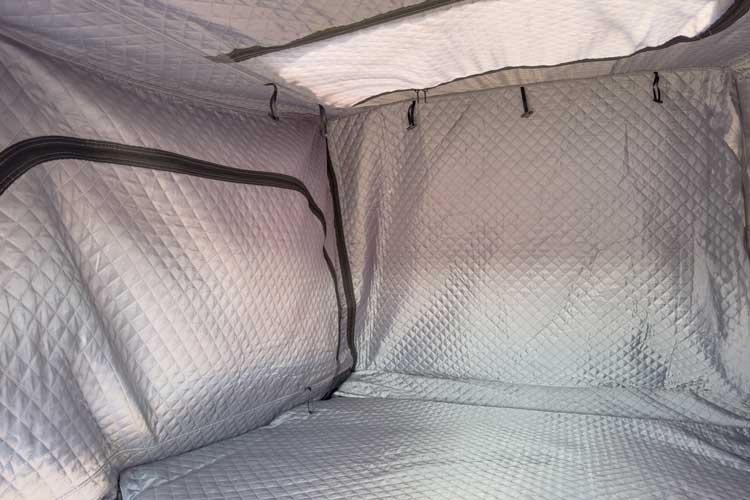
The perfect accessory for cold nights or winter camping in your Horizon Mini Rooftop Tent, adding an extra layer of thermal insulation for extra comfort.
In Stock
260.33 EUR
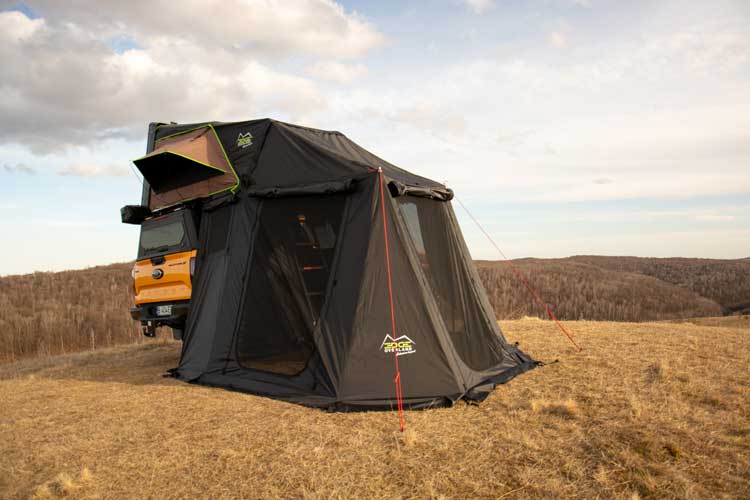
This versatile annex is the perfect companion to your Horizon Mini rooftop tent, offering a cozy yet functional expansion of your living space - all in a compact, easy-to-manage design that’s ideal for smaller vehicles.
In Stock
557.85 EUR
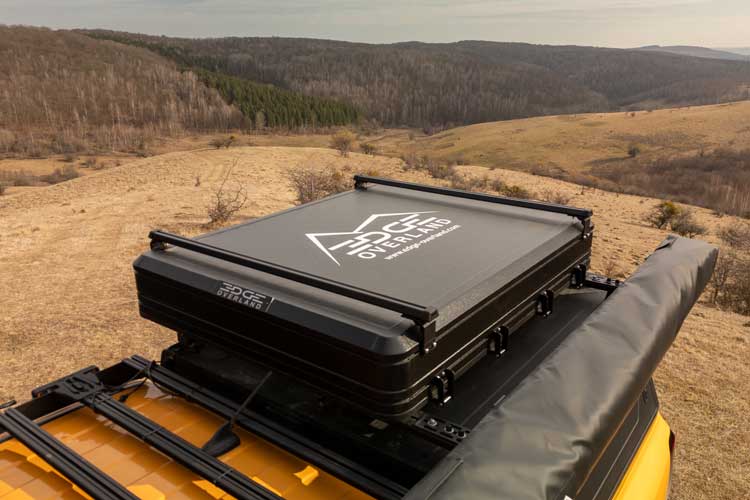
These roof bars allow you to bring along additional items on top of your Horizon Mini rooftop tent, from solar panels, to traction pads, bicycles, or basically anything else you need.
In Stock
132.23 EUR
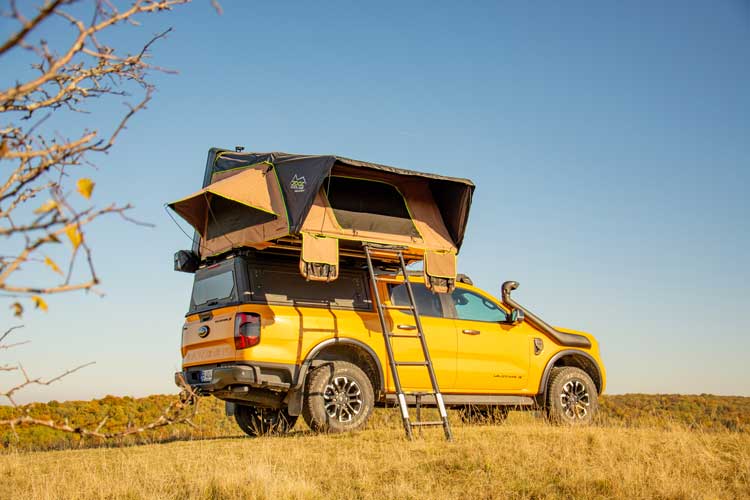
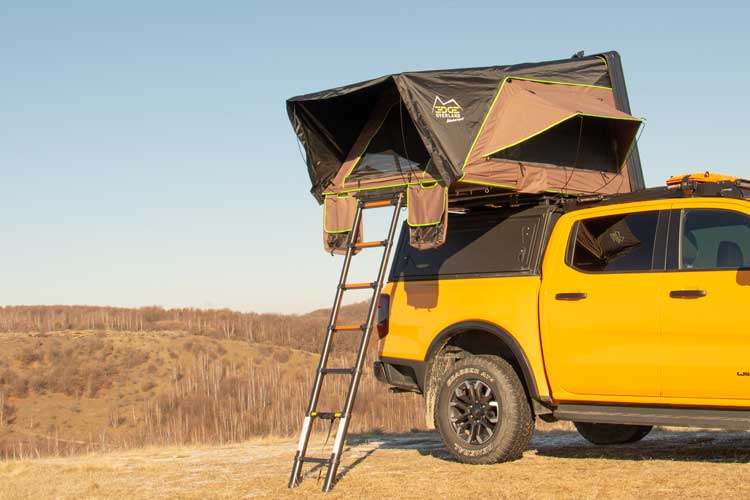
The Horizon Mini is a small rooftop tent and the most compact EDGE Overland model at 150 × 120 cm closed and 65 kg. It is the easiest model to recommend where keeping roof weight and footprint to a minimum matters, particularly on older or shorter-roof G-Class builds, and it is the recommended choice for SWB models. It opens to a 230 × 145 cm sleeping area for two adults, while its 25 cm closed height keeps the setup relatively low-profile. On modern G-Class models it also leaves very generous roof-load headroom, making it a strong choice for owners who prioritise a lighter, compact setup.
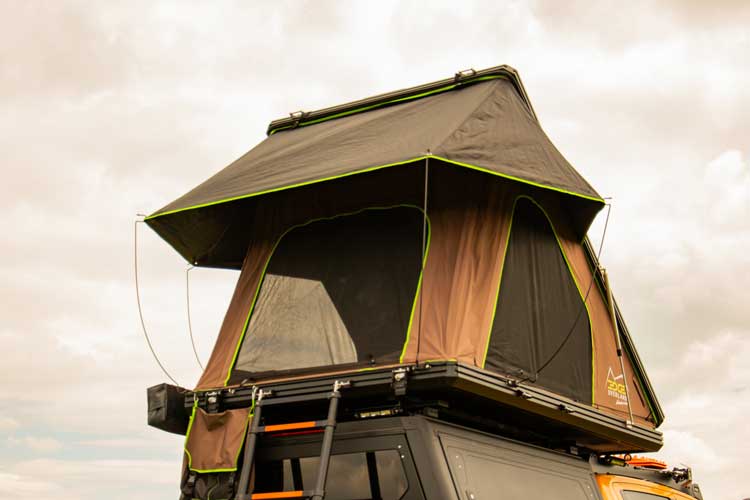
The Explore One is a low-profile rooftop tent for 2-3 persons and the lowest-profile tent in the range at 18 cm closed height - a meaningful advantage on a G-Class where total vehicle height matters on forest tracks, ferries and parking structures. At 220 × 145 cm closed and 70 kg, it is a compelling option for LWB and modern five-door G-Class configurations, and it sits comfortably within the 150 kg roof-load limit of the post-2018 G-Class. On SWB 3-door models, its length extends too far beyond the short roof, so it is not recommended there.
The Horizon One is a large rooftop tent for 4 persons, offering a 230 × 205 cm sleeping area - the largest in the EDGE Overland range - making it the strongest choice for G-Class owners who prioritise interior space. At 90 kg it is the heaviest EDGE model, but it sits comfortably within the 150 kg roof-load limit of the post-2018 G-Class. On suitable LWB earlier G-Class configurations, Horizon One can also be considered where the verified vehicle rating and correctly rated crossbars support the installation. On SWB 3-door models, its length extends too far beyond the short roof, so it is not recommended there.
The G-Class is a tall, narrow-track vehicle with a high centre of gravity even before anything is mounted to the roof. It is engineered to handle that by design - the suspension geometry, the locking differentials, and the solid rear axle construction are all part of a system built for stability under load in rough conditions. But adding a rooftop tent raises the centre of gravity further, and the flat boxy profile amplifies crosswind effects in a way that a rounded SUV body does not.
The adjustments are practical rather than dramatic: reduce motorway speed when fully loaded, be more conservative on exposed ridge lines and mountain passes, increase following distances, and treat side slopes with more respect than you would unloaded. None of this prevents the G-Class from being an excellent rooftop tent platform - it is one of the best available in Europe - but the physics should be acknowledged rather than ignored.
Fuel consumption increases with a rooftop tent and its mounting system installed, principally from aerodynamic drag. The G-Class is not a fuel-efficient vehicle to begin with, and the additional frontal area can add to consumption. A low-profile hardshell limits this more than a softshell or a high-profile setup - another reason the Horizon Mini and Explore One can be attractive on this platform.
Can you put a rooftop tent on a Mercedes-Benz G-Class?
Yes. The G-Class - from the early W460 and W461 through the W463 and modern post-2018 models - is an established rooftop-tent platform in European overlanding. Compatibility should be checked from the exact vehicle's roof geometry, verified dynamic roof-load rating, suitable crossbar positions and rating, and the tent's mounting requirements. On SWB 3-door models, Horizon Mini is the recommended choice; LWB and post-2018 models suit all three EDGE tents.
What is the Mercedes-Benz G-Class dynamic roof load rating?
There is no single roof-load figure that should be applied to every G-Class generation and variant. Late European W463 documentation shows 150 kg for models such as the G 350 d and G 500, with some AMG variants rated higher. Mercedes-Benz specifies 150 kg for the post-2018 G-Class when at least three pairs of supporting feet are used, and current European W465 specifications also state 150 kg. W461 figures vary by body configuration, while older W460 vehicles should be checked against the documentation for the exact vehicle.
Which EDGE Overland rooftop tent fits the G-Class?
All three EDGE Overland tents can be strong choices for the G-Class, with the best match depending on the vehicle and how the tent will be used. Horizon Mini is the natural choice for minimum weight and compact dimensions, and the recommended choice on SWB models; Explore One suits buyers who want the lowest packed profile; and Horizon One offers the largest sleeping area. On the post-2018 G-Class, all three are within the documented 150 kg roof-load limit by weight with Mercedes-Benz's 9.6 kg three-crossbar system. Earlier generations should be matched to the exact body configuration, verified roof-load rating and suitable crossbar setup.
Do I need a special roof rack for the G-Class?
Not necessarily. Crossbars are the standard solution: older G-Class generations commonly use correctly rated gutter-mount crossbars, while post-2018 models can use a vehicle-specific crossbar system attached to the factory mounting points. Mercedes-Benz offers a genuine three-crossbar system for the modern G-Class weighing 9.6 kg. A roof rack is useful when no suitable crossbars are available or when additional roof cargo needs to be carried alongside the tent.
Rooftop Tents
Explore One Hardshell Rooftop Tent v2
Horizon One Hardshell Rooftop Tent v2
Horizon Mini Compact Hardshell Rooftop Tent
Rooftop Tent Accessories
All Tents
Car Awnings
Infinity 270 Freestanding Car Awning v2
Shelter Max Freestanding Car Awning v2
Quick Cover Shower & Privacy Awning v2
Car Awning Accessories
All Awnings
Help Center













 Based on your location, you might want to use the site in . Would you like to switch now?