We use cookies to provide you with the best possible experience. They also allow us to analyze user behaviour in order to constantly improve the website for you. For more details, visit: https://business.safety.google/privacy/
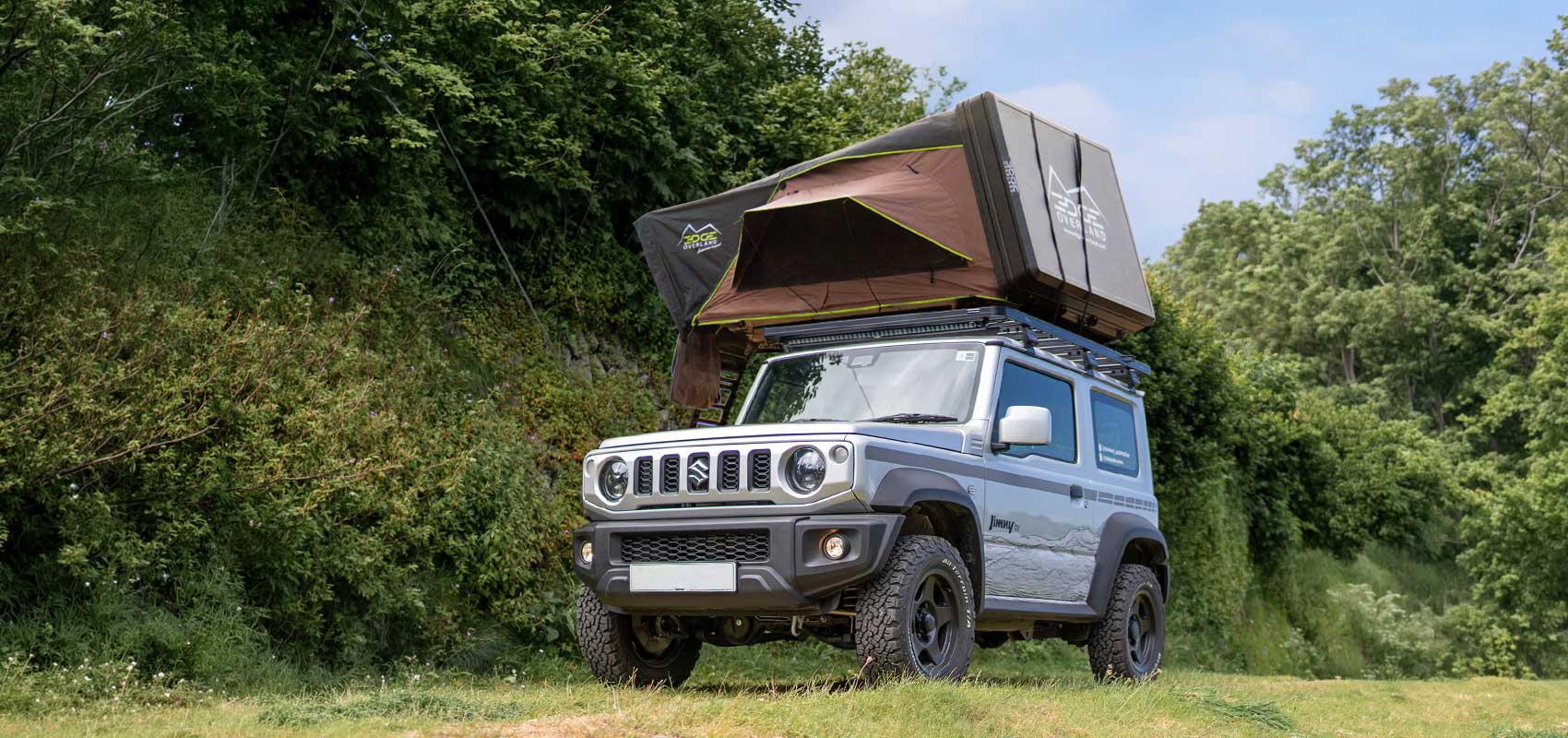
Set up a rooftop tent on your Suzuki Jimny and turn it into a capable, go-anywhere overland vehicle. The Jimny is one of the most popular small 4x4 overlanding platforms in Europe - compact, capable on technical terrain, and deeply embedded in the overlanding culture across the continent. This guide covers everything Jimny owners need to know: the relevant European-market generations, dynamic roof load ratings by model, roof rack and crossbar compatibility, hard-shell vs. soft-shell rooftop tent options, and which EDGE Overland tents work best on each Jimny variant.
The Jimny’s official dynamic roof load rating of 30 kg - as stated in the Suzuki Jimny owner’s manual - applies to the factory roof and OEM crossbars. With a quality aftermarket roof rack or crossbar system rated for the purpose, this baseline no longer applies as the primary limiting factor. The rack manufacturer’s own load rating becomes the relevant figure. This guide explains how to navigate that distinction practically.
 In Stock
2561.98 EUR
In Stock
2636.36 EUR
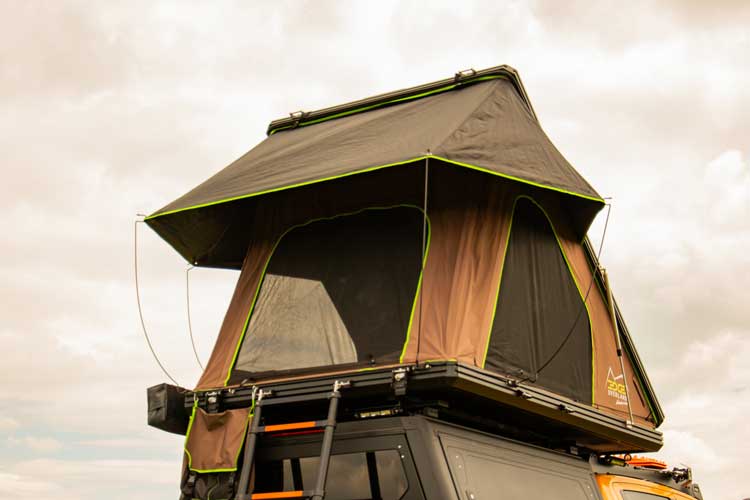
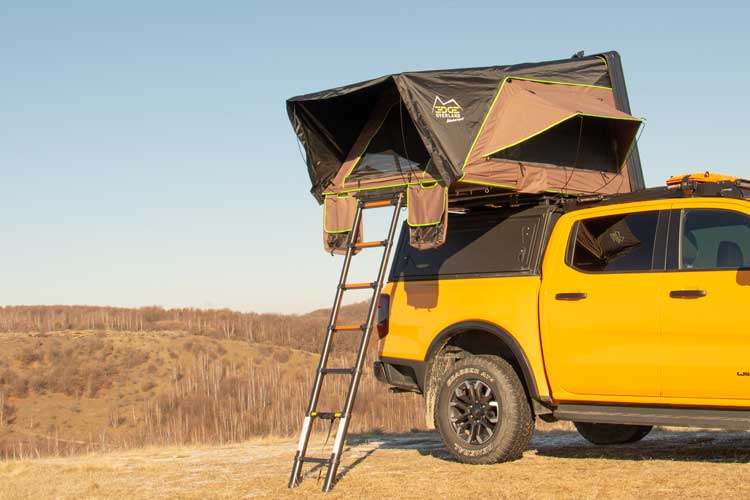
All EDGE Overland rooftop tents are hard-shell aluminium models with Raptor-style coating, 4000 mm water resistance, and fast one-person setup. The table below summarises the key specifications relevant to Jimny owners.
The Jimny is a different kind of overlanding platform. Its appeal in the European scene is not about capacity - it is about access. It goes where larger 4x4s cannot, fits on ferries and mountain tracks that turn away bigger vehicles, and can be maintained with basic tools in places with no workshop for 200 kilometres. But it is also genuinely small, with a short wheelbase, narrow track width, and a centre of gravity that becomes important to manage the moment you start adding weight above the roofline. Rooftop tent selection and installation on a Jimny requires more care than on a full-size expedition vehicle - and that is exactly what this guide addresses.
SJ Series / Jimny Samurai (1981–1998)
The SJ-series - sold across Europe as the Samurai - is where the Jimny’s overlanding reputation was built. Ladder frame, solid axles, rain gutters, and mechanical simplicity that made it repairable almost anywhere. It was never the most powerful small 4x4 on the market, but it proved itself on Alpine tracks, Pyrenean trails, and Balkan forest roads when everything else was too wide or too heavy.
Running a rooftop tent on an SJ is a niche choice, but a legitimate one in European overlanding circles. The rain gutters accept standard gutter-mount crossbar systems without drilling. Weight is the primary constraint on this platform - the SJ is light and its suspension was engineered for a different era - so keeping the roof load as low as possible matters more here than on later generations. A compact hard-shell tent is still the preferred option: the Horizon Mini at 65 kg gives you the faster setup, better aerodynamics, and weatherproofing of an aluminium shell, provided the crossbar system is rated for the load. If the rack genuinely cannot support a hardshell, a softshell in the 35–50 kg range is the fallback - but it should be treated as exactly that, not a first choice.
JB33 / JB43 (1998–2018)
The third-generation Jimny is, by a significant margin, the most common Jimny overlanding platform in Europe. It ran for twenty years, sold in large numbers, and has aged well - the 1.3-litre M13A engine is well understood, parts are widely available, and the ladder frame construction means repairs stay accessible even on the road. Among European overlanders on a budget, the JB43 is a serious choice and has been for decades.
The JB43 retains rain gutters - a practical advantage that allows straightforward gutter-mount crossbar installation without drilling or bespoke hardware. Thule, Yakima, and several European specialist suppliers offer compatible crossbar feet for this generation. Two solid crossbars rated appropriately for the load are all that is needed for a rooftop tent.
The Suzuki Jimny owner’s manual states a dynamic roof load rating of 30 kg for the JB43: “the gross weight of the roof rack plus cargo must not exceed 30 kg.” This figure applies to the factory roof setup. With a quality aftermarket crossbar system, the rack manufacturer’s load rating governs - and properly specified systems open up the full EDGE Overland hardshell range. The Horizon Mini at 65 kg on a quality crossbar system is the natural starting point for JB43 owners. Adjusting driving style to account for the additional roof weight is part of running any hardshell on this platform.
JB74 (2018–Present)
The fourth-generation Jimny arrived in Europe in 2018. After 2020, it was reclassified in several EU markets as an N1 commercial vehicle - a regulatory outcome that kept it available for sale as passenger cars were phased out of the Suzuki lineup in response to fleet CO2 targets. The practical result for buyers was straightforward: the JB74 remained on sale, often in stripped commercial specification, and the modification community adapted quickly.
The JB74 is the more capable Jimny from the factory. The 1.5-litre K15B engine delivers noticeably more performance than the older 1.3, the part-time 4x4 system with low-range transfer case is properly engineered, and the vehicle’s structure is modern. It is also the Jimny generation most commonly seen at European overlanding events with a rooftop tent installed.
The roof, however, is different from the JB43. There are no rain gutters. Mounting requires a gutter-clamp system designed specifically for the JB74. Front Runner’s Slimline II is a full-platform gutter-clamp rack designed for expedition use that supports a rooftop tent alongside other gear. The Rhino-Rack Jimny Overlanding Kit is a lightweight Pioneer LT tray on a gutter-clamp backbone - just over 19.5 kg installed, no drilling required, and purpose-built for the JB74.
The Suzuki Jimny JB74 owner’s manual carries the same 30 kg dynamic roof load rating for the factory roof configuration. With a properly engineered rack system, the rack manufacturer’s rating takes over, and compact rooftop tents in the 55–70 kg range are a realistic and widely used configuration on this platform across Europe.
The 30 kg dynamic roof load rating is a conservative OEM baseline - the figure stated in the Suzuki Jimny owner’s manual for the factory roof structure and standard mounting points under normal driving conditions. It does not represent what the roof can handle when a properly engineered aftermarket rack system is in place.
When a quality rack or crossbar system is fitted, the load is no longer borne by the roof panel alone. It is distributed across the rack structure and into the vehicle’s mounting points. The rack manufacturer’s load rating becomes the relevant figure for planning your setup.
That said, the Jimny is a small vehicle. Its short wheelbase and narrow track width mean that roof weight has a more pronounced effect on handling than it would on a larger 4x4. Every additional kilogram above the roofline raises the centre of gravity. This does not make a rooftop tent impractical - thousands of European overlanders run exactly this configuration without incident - but it does require an adapted approach to driving.
Important: If your rooftop tent setup exceeds the manufacturer’s stated dynamic roof load rating and relies on a rack system with a higher-rated capacity, driving style must be adjusted accordingly. Reduce speed on technical terrain, mountain passes, and in strong crosswind conditions. Increase following distance when braking is required. Avoid aggressive cornering. This is a matter of physics, not opinion - and it is the driver’s responsibility.
JB43 and SJ: The Gutter-Mount Advantage
Rain gutters are a genuine practical asset on the JB43 and SJ. They allow a wide range of crossbar systems to be fitted without drilling - clamping feet grip the gutter channel securely. Thule, Yakima, and several European specialist manufacturers offer compatible crossbar feet for this generation. The installation is clean, reversible, and does not require any permanent modification to the vehicle.
For a rooftop tent application, two crossbars of the appropriate width and load rating are sufficient and recommended. A full platform rack adds weight that is difficult to justify on a vehicle this size unless you are also carrying fuel cans, recovery boards, or other equipment alongside the tent. Crossbars keep the setup lighter and the centre of gravity lower - both of which matter on the Jimny.
JB74: Dedicated Gutter-Clamp Systems
The JB74 requires a dedicated approach. The Front Runner Slimline II for the Jimny is a full-platform rack using gutter-mount legs, designed for expedition use and rated for carrying a rooftop tent alongside additional gear. The Rhino-Rack Jimny Overlanding Kit uses a refined Pioneer LT tray on a gutter-clamp backbone system - lightweight, straightforward to install without drilling, and specifically engineered for the JB74. Both systems are well-established in European overlanding circles and the natural starting point for any JB74 tent build.
For rooftop tents in the 55–70 kg range, either system provides a well-distributed load that far exceeds what the OEM 30 kg figure implies. The load is spread across the rack structure and gutter-mount points rather than concentrated at a single location - which is the correct approach on this platform.
Verdict: Hard-shell rooftop tents are the preferred option on the Suzuki Jimny across all generations. The lower closed profile reduces aerodynamic drag and wind noise, the aluminium shell offers far better protection against weather and trail debris, and the one-to-three minute setup removes the daily friction that accumulates on longer trips. On a JB74 with a properly rated gutter-clamp rack, the Explore One or Horizon Mini are the natural choices. On a JB43 or SJ with quality crossbars, the Horizon Mini at 65 kg is the right starting point.
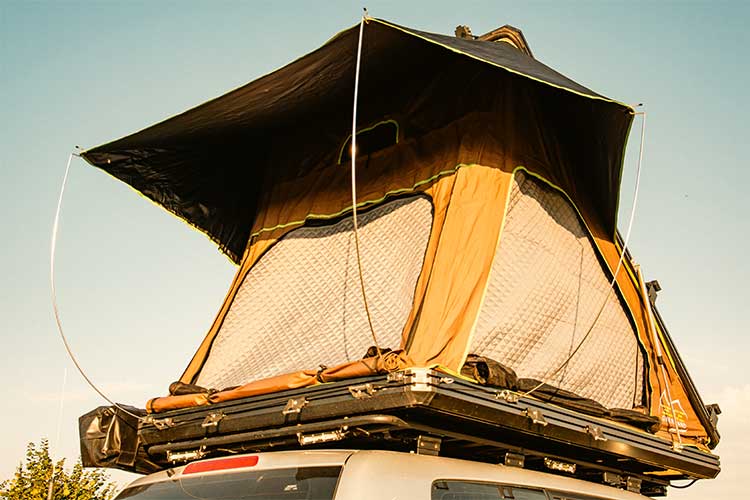
The perfect accessory for those cold nights out or winter camping in your Explore One Rooftop Tent, creating an extra layer of thermal insulation for maximum comfort.
In Stock
239.67 EUR
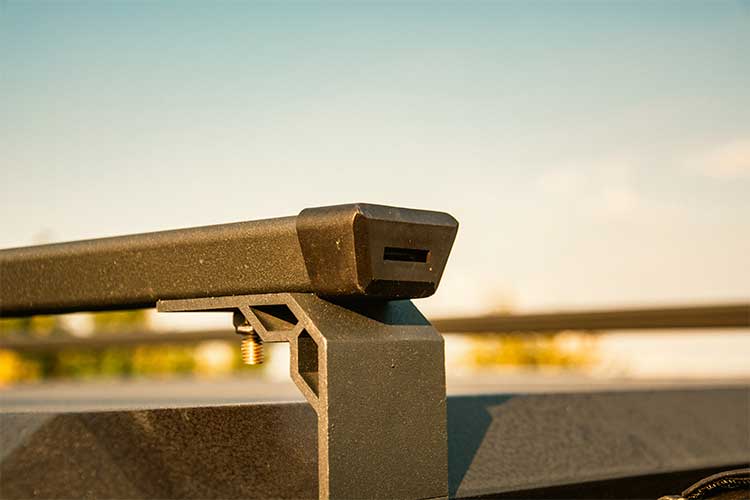
This roof bars allow you to carry additional items on top of your Explore One Rooftop Tent, may them be traction pads, solar panels, a kayak, bikes, or anything else you need on your trip.
In Stock
140.5 EUR
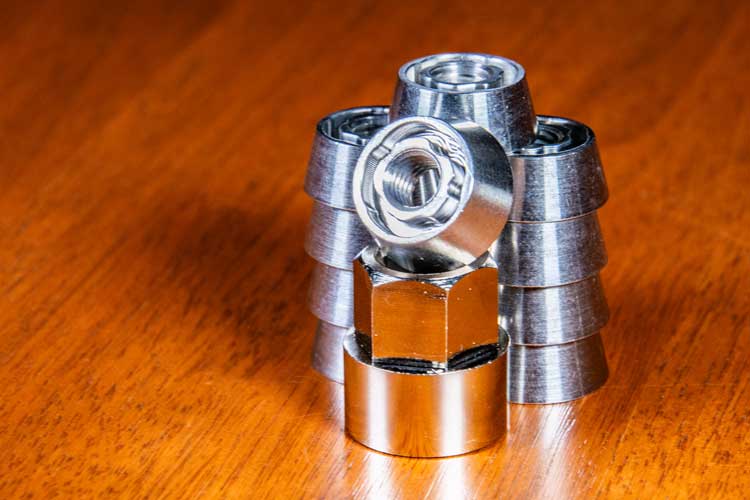
An essential accessory for outdoor adventurers and car enthusiasts. Specially designed for securing rooftop tents, car awnings, and various car accessories.
In Stock
41.32 EUR
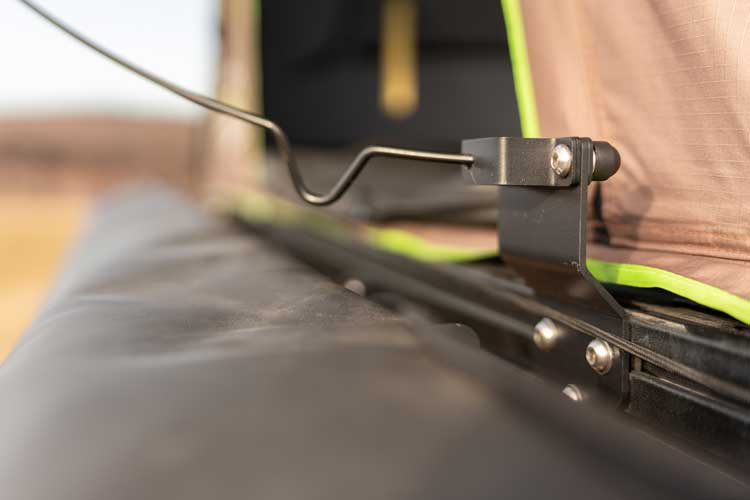
The Explore Pole Riser is a simple add-on made for our Explore rooftop tents. Its role is clear. It raises the mounting point of the rainfly poles. This small change solves a common setup problem many users face when running side-mounted gear.
In Stock
41.32 EUR
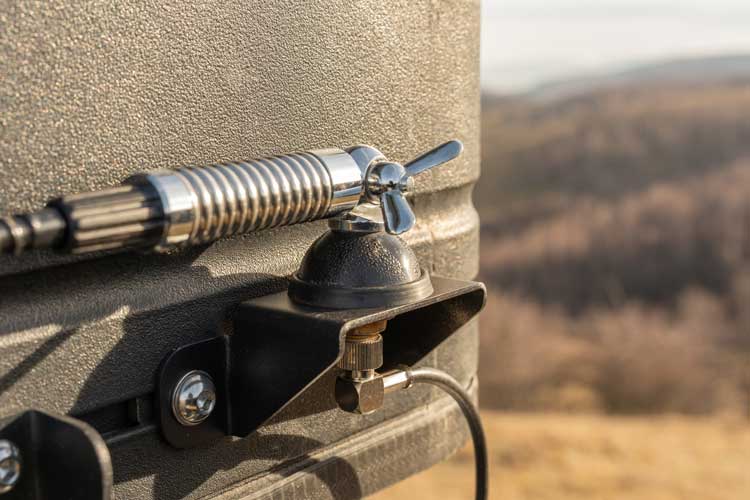
The antenna mounting bracket for rooftop tents gives you a simple way to mount an antenna directly on your EDGE Overland tent, without adding extra hardware to your vehicle.
In Stock
24.79 EUR
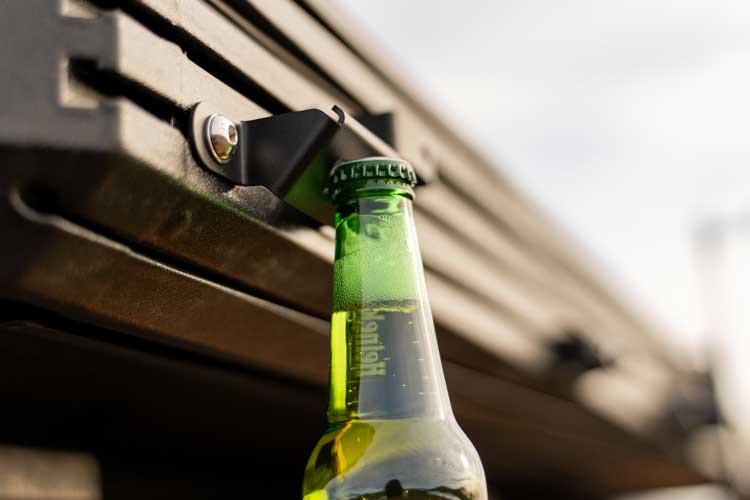
Never search for a bottle opener again! This opener stays conveniently mounted on your rooftop tent at all times. It is always ready. No searching. No unpacking. No frustration. Just crack open a cold one whenever you desire it!
In Stock
20.66 EUR
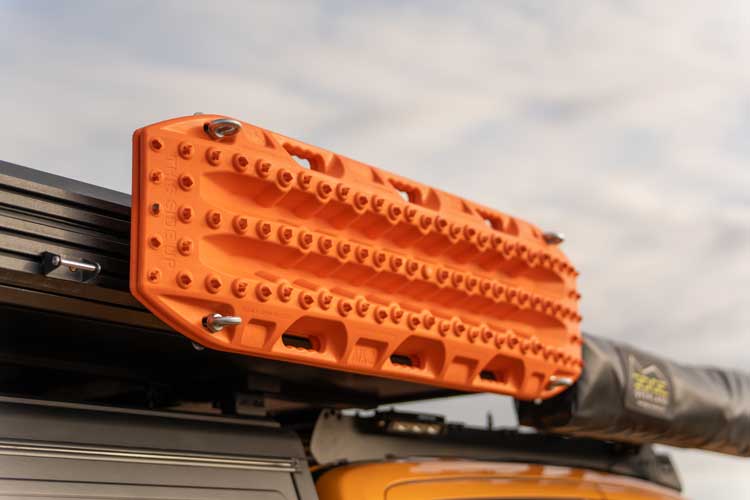
The traction board holder for rooftop tents is a simple, strong way to carry traction boards on your car tent. Using these brackets, you free up valuable space inside your vehicle or on your roof rack.
In Stock
99.17 EUR
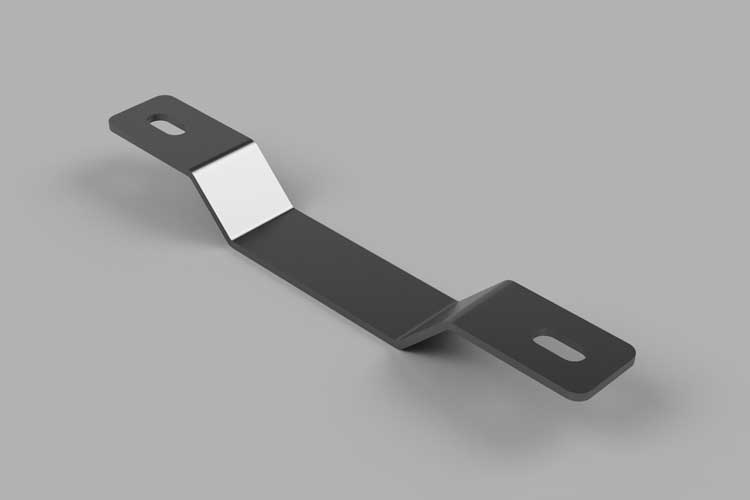
Most rooftop tents fit standard bars without effort. But some vehicles use wider roof bars or roof rack cross bars, and in those cases, a standard mounting kit cannot clamp the tent safely. These brackets solve the problem!
In Stock
33.06 EUR
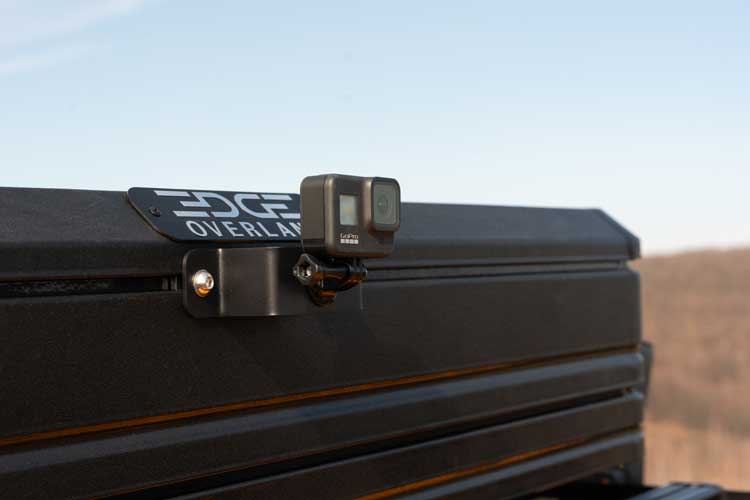
Want better footage from your trips without trying to hold a camera in the wrong place? This camera mounting bracket gives you a simple, secure way to attach your camera directly to your EDGE Overland rooftop tent.
In Stock
57.85 EUR
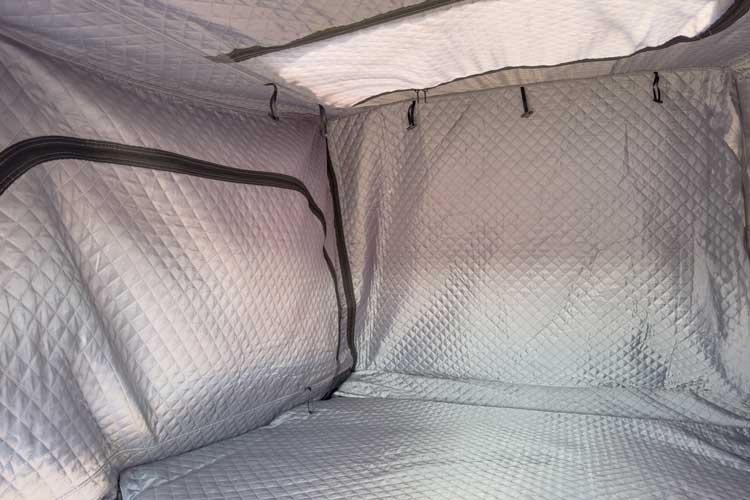
The perfect accessory for cold nights or winter camping in your Horizon Mini Rooftop Tent, adding an extra layer of thermal insulation for extra comfort.
In Stock
260.33 EUR
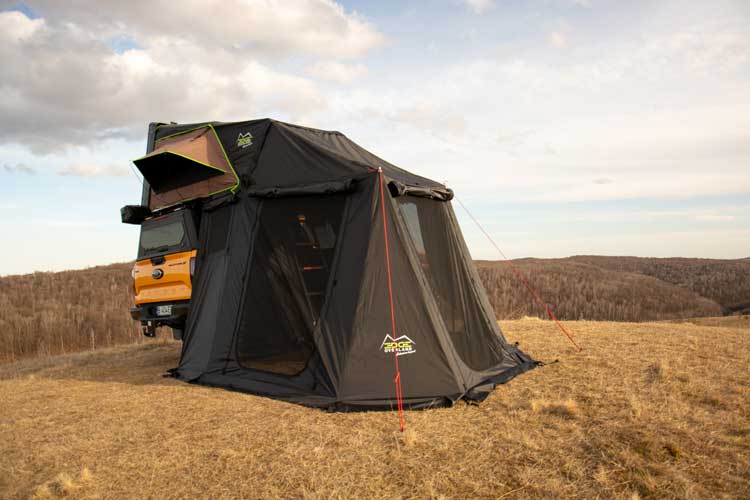
This versatile annex is the perfect companion to your Horizon Mini rooftop tent, offering a cozy yet functional expansion of your living space - all in a compact, easy-to-manage design that’s ideal for smaller vehicles.
In Stock
557.85 EUR
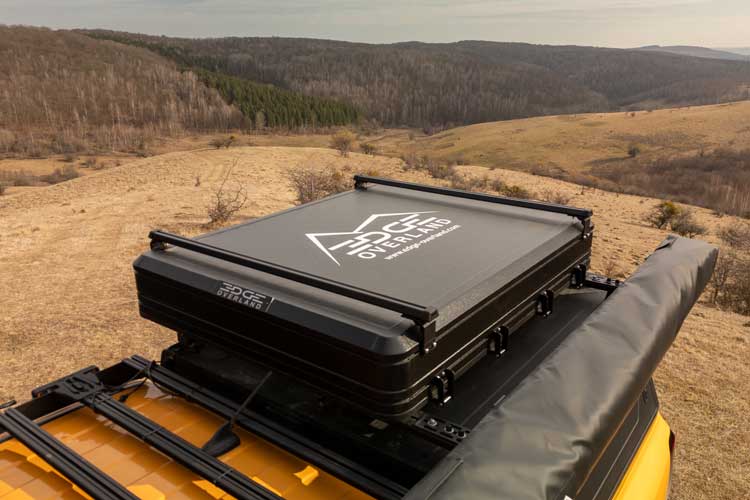
These roof bars allow you to bring along additional items on top of your Horizon Mini rooftop tent, from solar panels, to traction pads, bicycles, or basically anything else you need.
In Stock
132.23 EUR
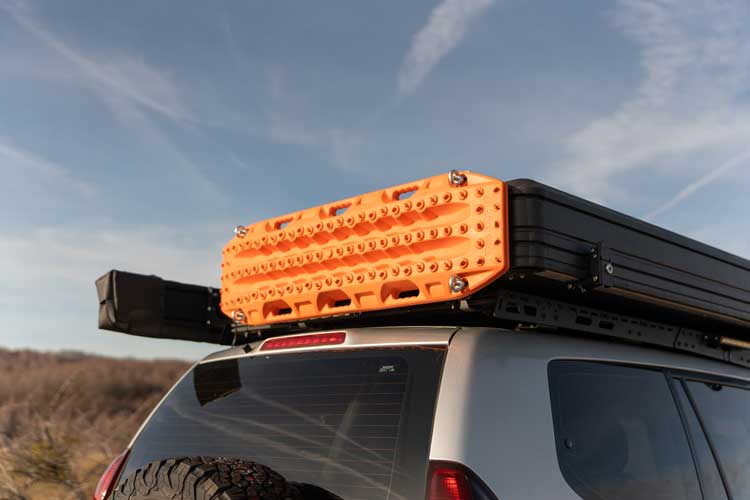
This holder mounts your traction boards directly to your Horizon Rooftop Tent. It frees space inside your vehicle and clears room on your roof rack - rather use that extra space for many other gear.
In Stock
99.17 EUR
Explore One - Best for Solo Travellers and Couples on the Move
The Explore One is the lowest-profile model in the range at 18 cm closed height and 70 kg - making it one of the more practical hardshell choices for the Jimny where minimising the overall vehicle height is a real consideration. The ultra-fast 1–2 minute one-person setup makes it well-suited to overlanders who move camp frequently. The 7 cm dual-compound mattress is the thickest in the EDGE Overland range, and the 210 × 135 cm sleeping area comfortably accommodates two adults. On a JB74 with a Front Runner Slimline II or Rhino-Rack Overlanding Kit, this is a well-balanced and widely used configuration.
Horizon Mini - Best Compact Option for the Jimny Platform
The Horizon Mini has the shortest closed footprint in the range at 150 × 120 cm - an important consideration on the Jimny’s small roof. It is also the lightest model at 65 kg, which leaves more working margin within the rack system’s rated capacity. Despite its compact closed size, it opens to a 230 × 145 cm sleeping area that comfortably fits two adults. For JB43 owners with a solid gutter-mount crossbar system, or JB74 owners looking for the lightest hardshell option, the Horizon Mini is the natural starting point.
Anyone who has driven a Jimny on technical terrain already knows that it rewards smooth, considered inputs over momentum-based driving. Short wheelbase, narrow track, body-on-frame - it is an agile platform, but not a forgiving one if you push it. A rooftop tent raises the centre of gravity on a vehicle that was already upright by design, and this shows in crosswinds, on side slopes, and during fast direction changes.
The practical adjustments are straightforward: reduce speed on exposed mountain roads and ridgelines, increase braking distances, take side slopes with more caution than you would without a roof load, and avoid aggressive cornering at any speed. These are not drastic restrictions - the Jimny with a properly fitted tent is a capable overlanding setup - but they are real physics that should not be ignored.
For heavier setups, a suspension upgrade is worth considering. Old Man Emu and Ironman 4x4 both produce Jimny-specific kits that improve load handling and maintain articulation. Not essential for lighter tent configurations, but for a JB74 running a 65–70 kg tent on extended multi-country trips, a properly specified suspension package makes a meaningful difference to both confidence and comfort.
Can you put a rooftop tent on a Suzuki Jimny?
Yes. The Jimny - both the JB43 and JB74 - is widely used for rooftop tent overlanding in Europe. The key is selecting the right rack system for your generation, keeping tent weight as low as practical, and adjusting your driving style to account for the raised centre of gravity. The SJ/Samurai can also carry a rooftop tent with appropriate crossbars; the Horizon Mini is the recommended starting point there, with a softshell only considered where the rack system’s rated capacity makes a hardshell impractical.
What is the Suzuki Jimny’s dynamic roof load rating?
According to the Suzuki Jimny owner’s manual, the gross weight of the roof rack plus cargo must not exceed 30 kg. This applies to the factory roof configuration. When a quality aftermarket rack or crossbar system is installed, the rack manufacturer’s own load rating governs - and properly engineered systems allow significantly more practical capacity. Always verify the specifications for your specific rack before purchasing a tent.
Do I need a full roof rack or just crossbars?
For a rooftop tent alone, quality crossbars or a purpose-built gutter-clamp system are the recommended solution. A full platform rack adds unnecessary weight high on the vehicle without meaningful benefit for tent mounting in most cases. Only consider a full platform rack if you need to carry substantial additional gear - fuel cans, recovery boards, water - alongside the tent.
Which EDGE Overland rooftop tent suits the Jimny best?
The Horizon Mini (65 kg, 150 × 120 cm closed) is the most natural fit for the Jimny platform given its compact footprint and the lowest weight in the hardshell range.
Rooftop Tents
Explore One Hardshell Rooftop Tent v2
Horizon One Hardshell Rooftop Tent v2
Horizon Mini Compact Hardshell Rooftop Tent
Rooftop Tent Accessories
All Tents
Car Awnings
Infinity 270 Freestanding Car Awning v2
Shelter Max Freestanding Car Awning v2
Quick Cover Shower & Privacy Awning v2
Car Awning Accessories
All Awnings
Help Center













 Based on your location, you might want to use the site in . Would you like to switch now?